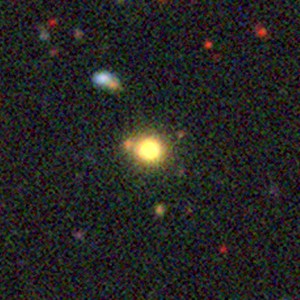
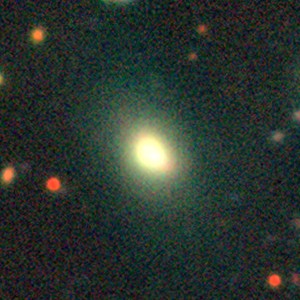
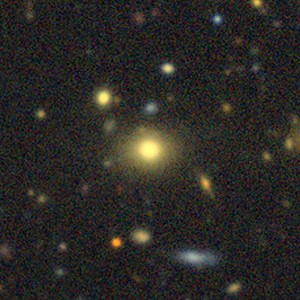
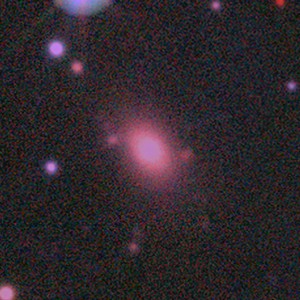
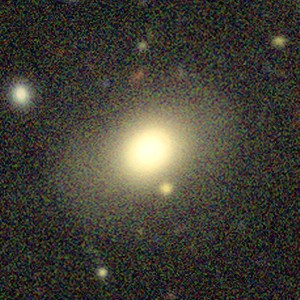
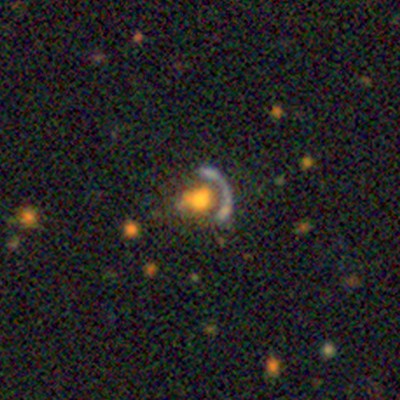
SDSS J162746.44-005357.5 is a SLACS lens with one adopted background galaxy. Spectral foreground/background separation and the published lens-imaging assessment support confirmation; multiple images are not treated…
Appearance not classifiedLens z = 0.2076
Credit: Legacy Surveys / D. Lang (Perimeter Institute)
SDSS J163028.15+452036.2 is a SLACS lens with one adopted background galaxy. Spectral foreground/background separation and the published lens-imaging assessment support confirmation; multiple images are not treated…
Appearance not classifiedLens z = 0.2479
Credit: Legacy Surveys / D. Lang (Perimeter Institute)
SDSS J171837.39+642452.2 is a SLACS lens with one adopted background galaxy. Spectral foreground/background separation and the published lens-imaging assessment support confirmation; multiple images are not treated…
Appearance not classifiedLens z = 0.0899
Credit: Legacy Surveys / D. Lang (Perimeter Institute)
SDSS J230053.14+002237.9 is a confirmed SLACS galaxy–galaxy lens. Foreground and background spectral features, Hubble imaging and lens modelling support one primary background galaxy; its multiple images…
Appearance not classifiedLens redshift unknown
Credit: Legacy Surveys / D. Lang (Perimeter Institute)
SDSS J230321.72+142217.9 is a confirmed SLACS galaxy–galaxy lens. Foreground and background spectral features, Hubble imaging and lens modelling support one primary background galaxy; its multiple images…
Appearance not classifiedLens z = 0.1553
Credit: Legacy Surveys / D. Lang (Perimeter Institute)
SDSS J232120.93-093910.2 is a confirmed SLACS galaxy–galaxy lens. Foreground and background spectral features, Hubble imaging and lens modelling support one primary background galaxy; its multiple images…
Appearance not classifiedLens z = 0.0819
Credit: Legacy Surveys / D. Lang (Perimeter Institute)
A luminous red galaxy and its surrounding group lens a distant star-forming galaxy into a bright arc and a counterimage. The simple ellipsoidal lens model reproduces…
Arc · Quadruple imageLens z = 0.4224
Credit: Legacy Surveys / D. Lang (Perimeter Institute)
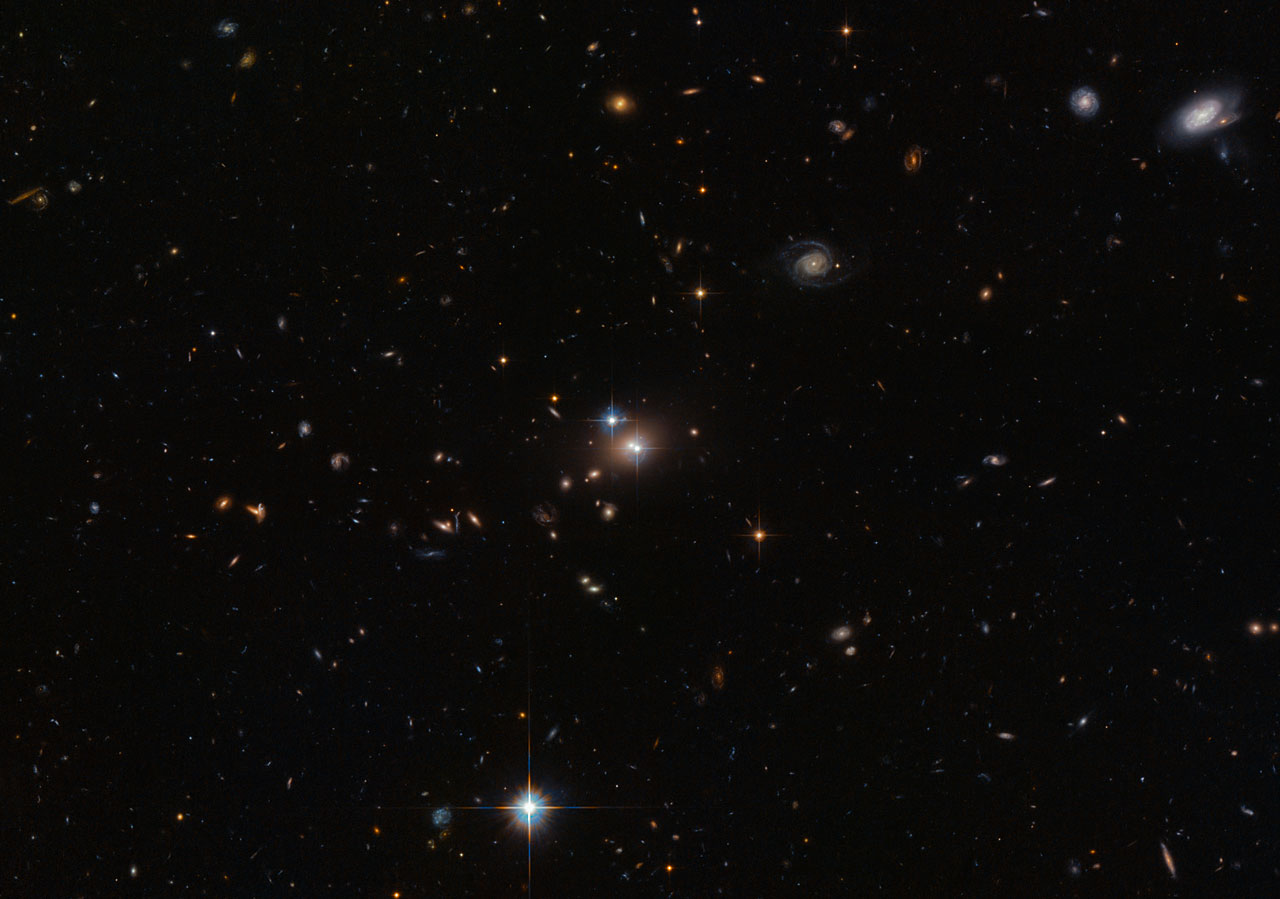
A massive elliptical galaxy, aided by its surrounding cluster, splits the light of one background quasar into two images. The Twin Quasar was the first recognized…
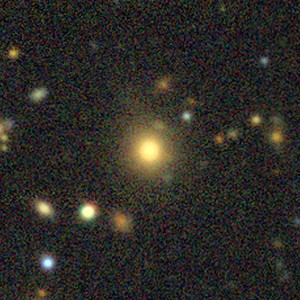 GLC-225